
Why does most leadership development not stick and what actually changes behaviour?
I have been in rooms talking about leadership development for more than 27 years.
And I want to say something that I do not always say out loud in a sales conversation: most of it does not work.
Not because the content is poor or the facilitators are unskilled or the organisation did not invest enough or follow up thoroughly enough.
It does not work because the people in the room have not yet made the inner decision that precedes outer change.
I realised this somewhere around my 500th workshop. We were delivering a well-designed, well-received two-day programme on leadership effectiveness for a manufacturing client. The participants were engaged, the feedback was strong, and the HR team was pleased. Three months later, the same HR head called to say she was not seeing any real change in how her managers were operating.
I could have blamed the implementation. I could have suggested a refresher session. Instead, I asked her: did anyone ask those managers, before the programme, what they were actually willing to do differently?
There was a pause. Then she said: No. We told them what the programme would cover. We did not ask them what they were ready to change.
“We design brilliant interventions for people who have not yet decided they want to intervene in themselves.”
The question we keep skipping
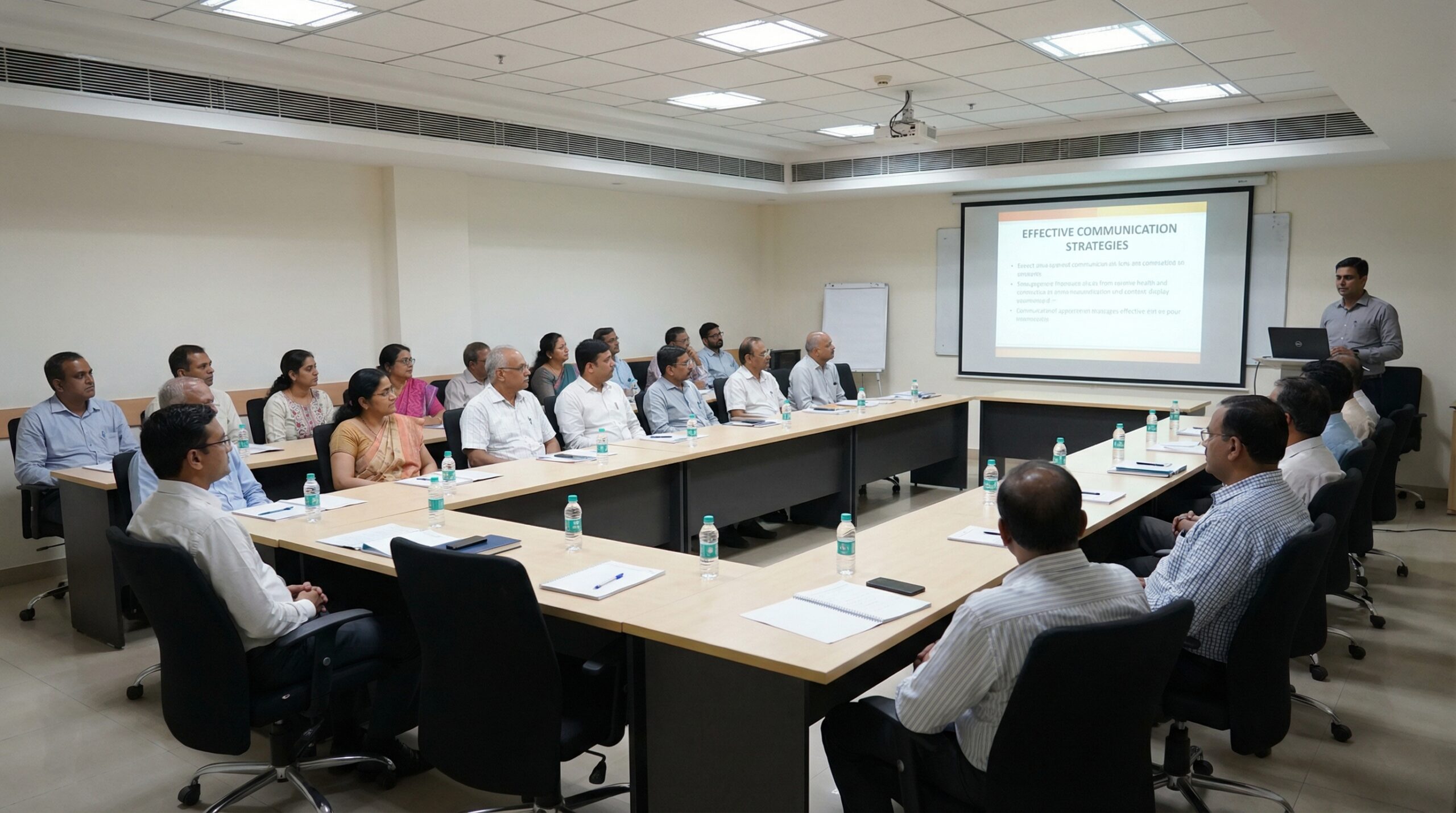
After 10,000+ workshops, I have arrived at something I now treat as a working principle: the readiness question is more important than the content question.
In most organisations, leadership development starts with a ‘needs analysis’. What competencies are missing? What behaviours need to change? What does the business require? These are useful questions. But they are all outward-facing questions, asked by the organisation about the individual.
The one question that is almost never asked — the one that changes everything — is inward-facing, and it has to be asked to the individual, not about them:
“What are you ready to change?”
Not what does the business need you to change. Not what would make your manager happier. What are you actually, genuinely, personally ready to do differently?
The answer to that question is the most reliable predictor of whether a development intervention will produce lasting change. The quality of the facilitator, the design of the programme, the number of follow-up sessions are all secondary factors.
The inner decision comes first. Everything else is in service of it.
What I have observed in the room

There is a particular moment that happens in almost every workshop I have facilitated. It usually occurs somewhere in the middle of day one.
A participant — often one of the more senior ones — stops performing engagement and starts actually thinking. You can see it happen. Something in the body language shifts. The pen that has been moving across the notepad in a way that suggests note-taking stops moving. The person looks up, or looks down, and goes somewhere quiet inside.
That is the moment the real work begins. Before that moment, the programme is happening to them. After it, they are in it.
What triggers that moment is never what you expect. It is rarely the most carefully designed exercise or the most insightful framework. It is usually a question. A specific one, asked at the right time, that lands in a way that a standard training agenda cannot manufacture.
In coaching, we call this a shift in awareness. In facilitation, I call it the room going honest. When it happens, everything that follows in the programme has a different quality. When it does not happen, the programme ends, people applaud, and the certificates get filed away.
The three catalysts for genuine behavioural change
Based on what I have seen across 27 years, three conditions make the difference between development that produces real change and development that produces good feedback forms.
- A genuine starting question
A real question, asked directly to the person, about what they are actually experiencing and what they want to be different. I have seen a well-placed, honest conversation of 20 minutes do more to prepare someone for development than a three-month formal assessment process.
The starting question is not about gaps. It is about readiness. And the two are not the same thing.
- Safety to be honest in the room
Most corporate training environments are not safe. Not unsafe in any dramatic sense — simply not safe enough for a leader to say, in front of colleagues and a facilitator hired by their organisation, what they are actually struggling with.
When the room is safe, the conversations that happen are different. When it is not, participants give you the version of themselves that it is acceptable to show in a work context. That version is interesting. It is just not the one that changes.
Creating that safety is the real skill of facilitation. It is not about rapport-building exercises or icebreakers. It is about being genuinely curious, genuinely non-judgmental, and modelling the kind of honesty you are hoping to draw out.
- Commitment that extends past the room
Even the most powerful development experience loses its effect if nothing happens in the days after. In my experience, the most useful thing a facilitator can do at the end of a programme is not summarise the learning. It is to help each participant identify one specific thing they will do differently. A specific, observable, small thing.
Small actions compound. One changed behaviour, repeated over three months, does more than ten insights from a programme that produces no action.
In my coaching work, I see this most clearly. The clients who shift the most over six months are rarely the ones who arrive with the biggest ambitions for change. They are the ones who are willing to do small, honest, consistent work and who have enough support around them to experiment without fear of judgement.
What this means for HR and L&D professionals
If you commission leadership development programmes, this is worth sitting with.
Before you ask what programme is right, ask what conditions you have created for the people attending. Have you spoken to them about what they actually want from it? Have you given them any say in what gets worked on? Have you created an environment where the learning can be applied without ridicule or rollback?
The ROI of a leadership programme is not determined in the training room. It is determined by what happens in the three months after and whether the organisation has done the invisible work of making honest change possible.
The best thing I have ever heard an HR leader say to a participant before a programme was this: go in and work on the real thing. Not the official thing. The real thing. We will support whatever comes out.
That organisation saw genuine change. I have not forgotten it.
Leadership development does not fail because of poor design; it fails because we forget that genuine change requires an inner decision that no programme can ever make for the person in the room.

If you are reading this and recognising yourself
Then you probably already knew something was off.
The question worth asking is not how bad it has to get before you do something. The question is what it would take to create one space in your week — even one hour — where you are not performing, not managing, not delivering. Where you can be honest about what you are actually experiencing.
That is usually where the work begins. And in my experience, the leaders who create that space — who are willing to look at what is underneath the performance — are the ones who find their way back to work that feels like it fits again.
Not necessarily the same work. Not necessarily the same way of operating. But something that is sustainable. Something that is actually theirs.
Recent Posts

Why does most leadership development not stick ?
April 1, 2026

When high performance becomes a trap
April 1, 2026

What Changes While Leading through transition
April 1, 2026